
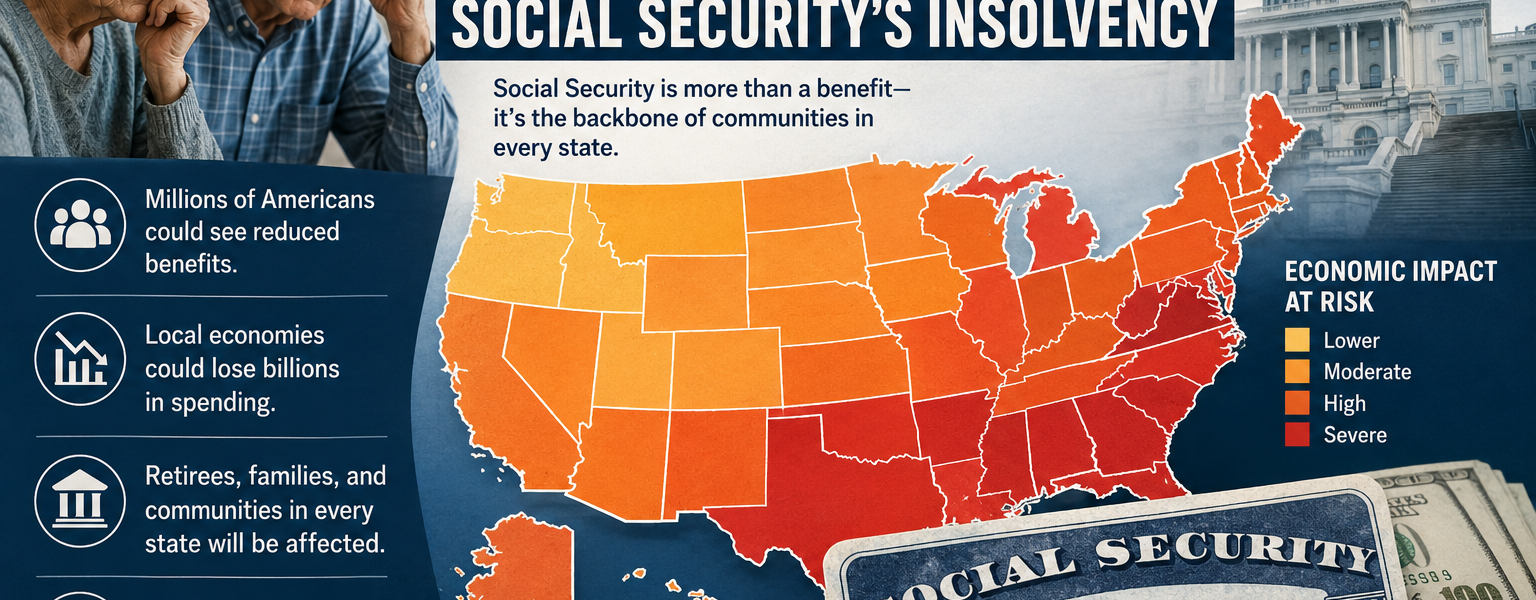
No State Spared: Mapping the Impact of Social Security’s Insolvency

No State Spared: Mapping the Impact of Social Security’s Insolvency
Social Security has long served as a financial lifeline for millions of Americans, providing retirement, disability, and survivor benefits. However, growing concerns about the program’s long-term financial health have sparked nationwide debate. Recent projections suggest that the Social Security Trust Fund could face insolvency within the next decade if lawmakers fail to implement reforms. The consequences would be felt across every state, affecting retirees, workers, families, and local economies.
What Does Social Security Insolvency Mean?
Social Security insolvency does not mean the program will completely disappear. Instead, it means the trust funds responsible for paying full benefits may become depleted. Once reserves run out, incoming payroll tax revenue would only cover a portion of scheduled benefits, potentially resulting in automatic benefit reductions for millions of recipients.
According to current estimates, beneficiaries could face cuts of around 20% to 25% if no legislative action is taken.
Every State Faces Economic Consequences
The impact of Social Security extends far beyond individual recipients. Benefits help support local businesses, healthcare providers, housing markets, and community services throughout the United States.
States with large retiree populations such as Florida, Arizona, Pennsylvania, and West Virginia would likely experience significant economic strain. However, no state would be immune. Rural communities that depend heavily on Social Security income could be particularly vulnerable, as benefit payments often represent a substantial share of local economic activity.
Retirees Could Face Financial Challenges
For many retirees, Social Security represents a major source of income. Some depend on it for more than half of their monthly household earnings. A reduction in benefits could force many older Americans to:
– Delay retirement
– Reduce spending on healthcare
– Cut household expenses
– Seek part-time employment
– Rely more heavily on family support
Low-income seniors would face the greatest risks, as they typically have fewer alternative sources of retirement income.
Impact on Disability and Survivor Benefits
The consequences would not be limited to retirees. Millions of Americans receiving disability benefits and families relying on survivor benefits could also experience reduced payments.
These programs provide critical financial support for individuals unable to work due to disability and for children or spouses who have lost a family breadwinner.
Why Is Social Security Facing Financial Pressure?
Several factors are contributing to Social Security’s financial challenges:
Aging Population
As the Baby Boomer generation retires, the number of beneficiaries continues to grow.
Longer Life Expectancy
Americans are living longer, meaning benefits are paid for more years.
Lower Worker-to-Retiree Ratio
Fewer workers are contributing payroll taxes relative to the number of retirees receiving benefits.
Rising Costs
Inflation adjustments and healthcare-related expenses continue to increase the program’s financial obligations.
Potential Solutions Under Discussion
Policymakers have proposed several approaches to strengthen Social Security’s finances, including:
– Increasing payroll taxes
– Raising the retirement age
– Adjusting benefits for higher-income retirees
– Expanding taxable earnings limits
– Combining multiple reform measures
While opinions differ on the best path forward, most experts agree that earlier action would allow for more gradual changes and reduce the burden on future generations.
Conclusion
Social Security remains one of the most important programs in the United States, supporting millions of retirees, disabled workers, and surviving family members. If insolvency projections become reality, the effects would be felt in every state and community across the country. As lawmakers debate potential reforms, the future of Social Security will remain a critical issue for Americans of all ages.