
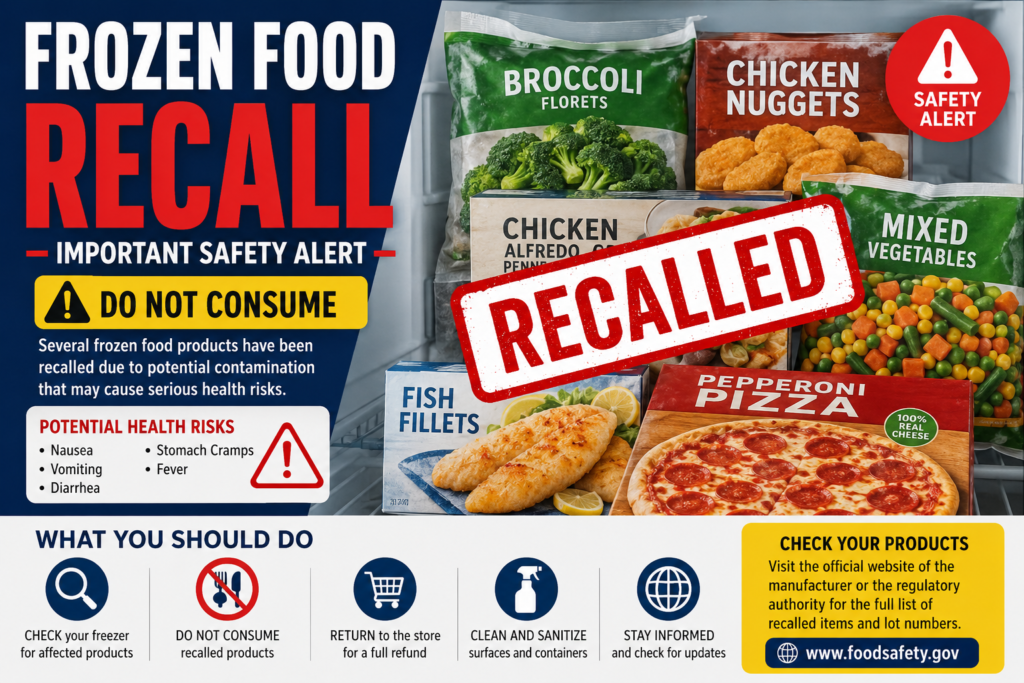
Frozen Food Recall 2026: Major Safety Alert, Affected Products, Health Risks, and What Consumers Need to Know
Frozen foods have become an essential part of modern life. From frozen vegetables and ready-to-eat meals to seafood, meat products, and snacks, millions of people rely on frozen food for convenience and long shelf life. However, recent frozen food recalls have once again highlighted the importance of food safety and quality control in the food industry.
Food recalls are issued when a product is found to pose a potential health risk to consumers. In many cases, recalls are precautionary measures taken by manufacturers and regulatory authorities to prevent illnesses and ensure public safety. The latest frozen food recall has attracted significant attention, with several products being removed from store shelves due to concerns about contamination, labeling errors, or the presence of undeclared ingredients.
This article explores the reasons behind frozen food recalls, the potential health risks, what consumers should do if they have purchased affected products, and how food manufacturers are responding to ensure safety.
Understanding Frozen Food Recalls
A frozen food recall occurs when a manufacturer, distributor, or regulatory authority determines that a frozen food product may be unsafe for consumption. The recall process is designed to quickly remove potentially dangerous products from the market before they can cause harm to consumers.
Recalls can be voluntary, initiated by the manufacturer, or mandated by government agencies responsible for food safety. The primary goal is to protect public health while investigating the source of the issue.
Frozen food recalls can involve a wide range of products, including:
• Frozen vegetables
• Frozen fruits
• Frozen seafood
• Frozen meat and poultry
• Frozen ready meals
• Frozen snacks and appetizers
• Frozen desserts
• Frozen pizza products
Because frozen foods often remain in consumers’ homes for weeks or even months, recalls can be particularly important. People may continue storing affected products in freezers long after purchase, increasing the importance of public awareness.
Common Reasons for Frozen Food Recalls
There are several reasons why frozen food products may be recalled. Some of the most common causes include contamination, mislabeling, and manufacturing issues.
1. Bacterial Contamination
One of the most serious causes of food recalls is bacterial contamination. Harmful bacteria such as Listeria monocytogenes, Salmonella, and E. coli can sometimes contaminate food during production, packaging, or distribution.
Listeria is particularly concerning because it can survive and grow even in refrigerated conditions. While freezing slows bacterial growth, it may not completely eliminate certain pathogens.
2. Undeclared Allergens
Food allergies affect millions of people worldwide. Products containing allergens such as milk, eggs, peanuts, tree nuts, soy, wheat, fish, or shellfish must be clearly labeled.
If a frozen food product contains an undeclared allergen, it can trigger severe allergic reactions, including anaphylaxis, a potentially life-threatening condition. As a result, allergen-related recalls are taken very seriously.
3. Foreign Material Contamination
In some cases, food recalls occur because products may contain foreign materials such as plastic fragments, metal pieces, glass particles, or rubber components. These contaminants can cause injuries if consumed.
4. Packaging Errors
Incorrect packaging can lead to consumers receiving a different product than what is listed on the label. This may result in allergen exposure or confusion regarding ingredients and nutritional information.
5. Quality Control Issues
Manufacturing errors, temperature-control failures, and sanitation problems can all contribute to recalls. Food safety systems are designed to identify these issues before products reach consumers, but recalls may still occur when problems are discovered after distribution.
Health Risks Associated with Contaminated Frozen Foods
The health effects of consuming contaminated frozen food can vary depending on the type of contamination and the individual’s health condition.
Food Poisoning Symptoms
Common symptoms of foodborne illness include:
• Nausea
• Vomiting
• Diarrhea
• Stomach pain
• Fever
• Headaches
• Fatigue
• Muscle aches
Symptoms may appear within hours or several days after consuming contaminated food.
High-Risk Groups
Certain individuals face a greater risk of serious complications from foodborne illnesses, including:
• Young children
• Pregnant women
• Older adults
• People with weakened immune systems
• Individuals undergoing medical treatments
For these groups, infections caused by contaminated food can result in hospitalization or more severe health complications.
Impact on Consumers
Food recalls often create concern among consumers, particularly when widely distributed products are involved. People may need to check their freezers, discard products, or return them to retailers.
In addition to health concerns, recalls can also affect consumer confidence. Many shoppers rely on trusted brands and expect strict quality control measures. When recalls occur, companies must work hard to rebuild trust and demonstrate their commitment to food safety.
Fortunately, most recalls are issued as precautionary measures before widespread illnesses occur. This reflects the effectiveness of food monitoring systems and regulatory oversight.
What Should Consumers Do?
If you hear about a frozen food recall, it is important to take immediate action.
Check Product Information
Carefully examine:
• Product name
• Brand name
• Package size
• Batch or lot number
• Expiration date
Compare this information with official recall notices.
Do Not Consume Recalled Products
Even if the food looks and smells normal, it should not be consumed if it has been included in a recall notice.
Return or Dispose of the Product
Most retailers and manufacturers offer refunds or replacements for recalled products. Follow the instructions provided in the recall announcement.
Clean Storage Areas
If the recalled product may have leaked or contaminated other surfaces, thoroughly clean:
• Freezer shelves
• Storage containers
• Kitchen counters
• Utensils
Using hot water and appropriate sanitizing products can help reduce contamination risks.
Monitor Your Health
Anyone who has consumed a recalled product and experiences symptoms of foodborne illness should seek medical advice, particularly if symptoms are severe or persistent.
How Food Companies Respond to Recalls
Food manufacturers take recalls seriously because they impact both public safety and brand reputation.
Once a problem is identified, companies typically:
• Stop product distribution.
• Notify retailers and distributors.
• Issue public recall announcements.
• Investigate the source of the problem.
• Implement corrective actions.
• Strengthen quality control procedures.
Many companies also work closely with food safety agencies to ensure transparency throughout the recall process.
Advances in Food Safety Technology
Modern food production facilities use advanced technologies to reduce contamination risks. These may include:
• Automated inspection systems
• Metal detection equipment
• X-ray scanning technology
• Microbial testing programs
• Supply chain tracking systems
• Digital quality monitoring tools
These innovations help manufacturers identify potential issues earlier and improve overall food safety standards.
The Importance of Food Safety Awareness
Consumers also play a role in food safety. Proper food handling and storage practices can help reduce risks associated with foodborne illnesses.
Helpful tips include:
• Keeping freezers at the correct temperature.
• Following cooking instructions carefully.
• Washing hands before handling food.
• Separating raw and cooked foods.
• Checking product recalls regularly.
Being informed about food safety alerts allows consumers to respond quickly when recalls occur.
Economic Impact of Food Recalls
Food recalls can be costly for manufacturers and retailers. Expenses may include:
• Product removal and disposal
• Transportation costs
• Investigation expenses
• Public communication efforts
• Legal and regulatory compliance
• Lost sales and reputational damage
Despite these costs, recalls remain an essential tool for protecting consumers and maintaining trust in the food supply chain.
Looking Ahead
As food production systems continue to evolve, food safety will remain a top priority for manufacturers, regulators, and consumers alike. Advances in testing technology, traceability systems, and quality assurance programs are helping reduce risks and improve the detection of potential problems before products reach store shelves.
While recalls can be alarming, they are also evidence that food safety monitoring systems are functioning as intended. By identifying potential hazards and removing affected products from circulation, recalls help prevent larger public health issues.
Conclusion
The latest frozen food recall serves as an important reminder that food safety requires constant vigilance. Whether the issue involves bacterial contamination, undeclared allergens, packaging errors, or manufacturing problems, prompt action is essential to protect consumers.
For shoppers, staying informed about recall announcements, checking product labels, and following safety recommendations can significantly reduce health risks. For food manufacturers, maintaining rigorous quality control standards remains critical to ensuring consumer trust and public safety.
As investigations continue and food safety systems become more advanced, consumers can expect ongoing efforts to improve product quality and minimize the likelihood of future recalls. Until then, awareness, caution, and proper food handling practices remain the best tools for keeping families safe and healthy.