
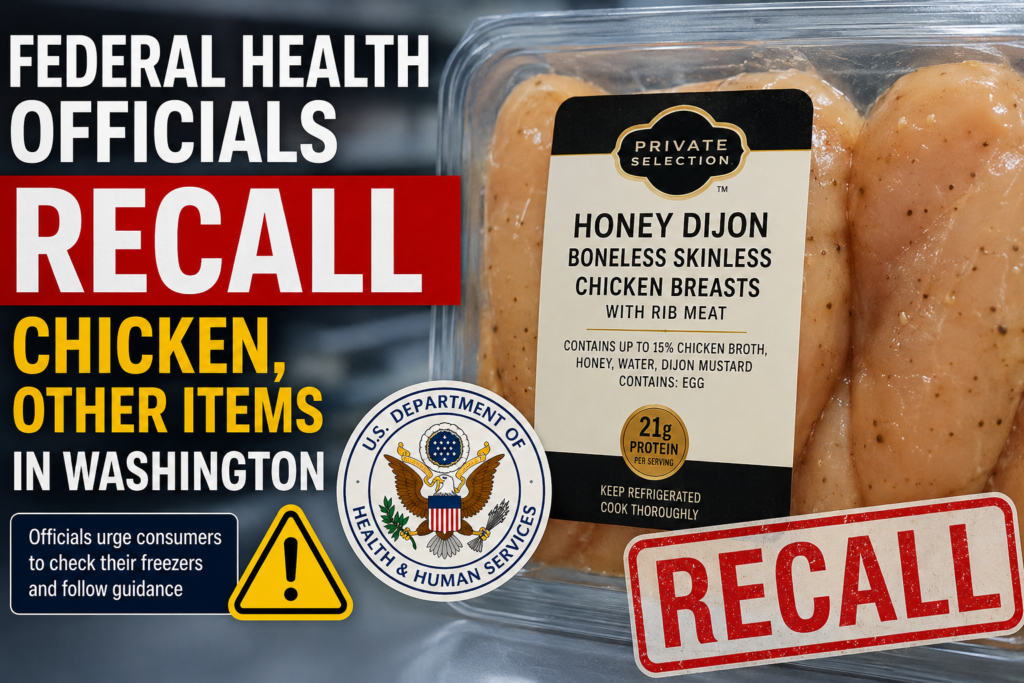
Federal Health Officials Recall Chicken, Other Food Items in Washington: What Consumers Need to Know
Federal health officials have issued a series of food safety alerts and recalls affecting consumers in Washington and several other U.S. states. The latest warnings include chicken products with labeling issues, as well as other food items recalled over concerns ranging from undeclared allergens to possible bacterial contamination.
The alerts were announced by the U.S. Department of Agriculture’s Food Safety and Inspection Service (FSIS) and other federal agencies to protect public health and ensure consumers are aware of potentially unsafe products.
Chicken Product Under Public Health Alert
One of the most significant alerts involves Private Selection Honey Dijon Boneless Skinless Chicken Breasts with Rib Meat, sold at Kroger and Fred Meyer stores in nine states, including Washington.
According to FSIS, the issue is not bacterial contamination but a mislabeling error. The back label mistakenly displays ingredients for a different product and fails to declare egg as an allergen. This could pose a serious health risk for people who have egg allergies.
The affected product includes:
• Private Selection Honey Dijon Boneless Skinless Chicken Breasts with Rib Meat
• 21-ounce vacuum-packed packages
• Best-if-used-by date: June 28, 2026
• Lot Code: 15326A
Although the product is no longer available in stores, consumers may still have it in their refrigerators or freezers.
States Affected
The public health alert applies to products distributed in:
• Washington
• Oregon
• Idaho
• Alaska
• Alabama
• Illinois
• Indiana
• Kentucky
• Tennessee
Consumers in these states should immediately check their kitchens for the affected packages.
Why the Alert Was Issued
Federal officials explained that the packaging error resulted in the failure to list eggs as an ingredient.
For most consumers, the product does not present a safety concern. However, for individuals with egg allergies, eating the chicken could trigger reactions ranging from mild symptoms to severe, life-threatening anaphylaxis.
No allergic reactions related to this product had been reported at the time the alert was issued.
Other Food Items Also Recalled
The chicken alert comes alongside several other food recalls announced by federal agencies.
Recent recalls include:
• Alfredo sauce due to potential Salmonella contamination.
• Chocolate-covered raisins because of undeclared peanuts.
• MorningStar Farms frozen products over possible plastic contamination.
These recalls highlight the importance of checking recall notices regularly and following food safety guidance.
What Consumers Should Do
If you purchased the affected chicken product:
• Do not consume it if you or anyone in your household has an egg allergy.
• Throw the product away or return it to the store for a refund.
• Clean any surfaces or utensils that came into contact with the product.
• Seek medical attention immediately if an allergic reaction occurs after consumption.
Understanding Public Health Alerts
Unlike a formal recall, a public health alert is issued when officials believe a product may still be in consumers’ homes but is no longer available for sale.
The goal is to inform consumers about potential risks and encourage appropriate action before illnesses occur.
Food Safety Tips
Health experts recommend these simple practices:
• Read ingredient labels carefully.
• Stay informed about food recalls.
• Store raw poultry properly.
• Cook chicken to an internal temperature of 165°F (74°C).
• Wash hands and kitchen surfaces after handling raw meat.
These steps can significantly reduce the risk of foodborne illness and allergic reactions.
Growing Importance of Food Recall Awareness
Food recalls have become increasingly common as manufacturers and regulators improve food testing and monitoring systems. While recalls can be concerning, they demonstrate that safety checks are working to identify potential hazards before they become widespread public health issues.
Consumers are encouraged to remain vigilant by checking official food safety announcements regularly and responding promptly when recalled products are identified.
Conclusion
The latest federal health alert serves as another reminder that food safety remains a shared responsibility between manufacturers, regulators, retailers, and consumers. Washington residents—and shoppers across the nine affected states—should inspect their refrigerators and freezers for the mislabeled chicken product and follow the recommended guidance if they find it.
Although no illnesses have been reported in connection with this alert, acting quickly can help prevent serious allergic reactions and keep families safe. Staying informed about recalls is one of the easiest ways to protect your household from avoidable health risks.