
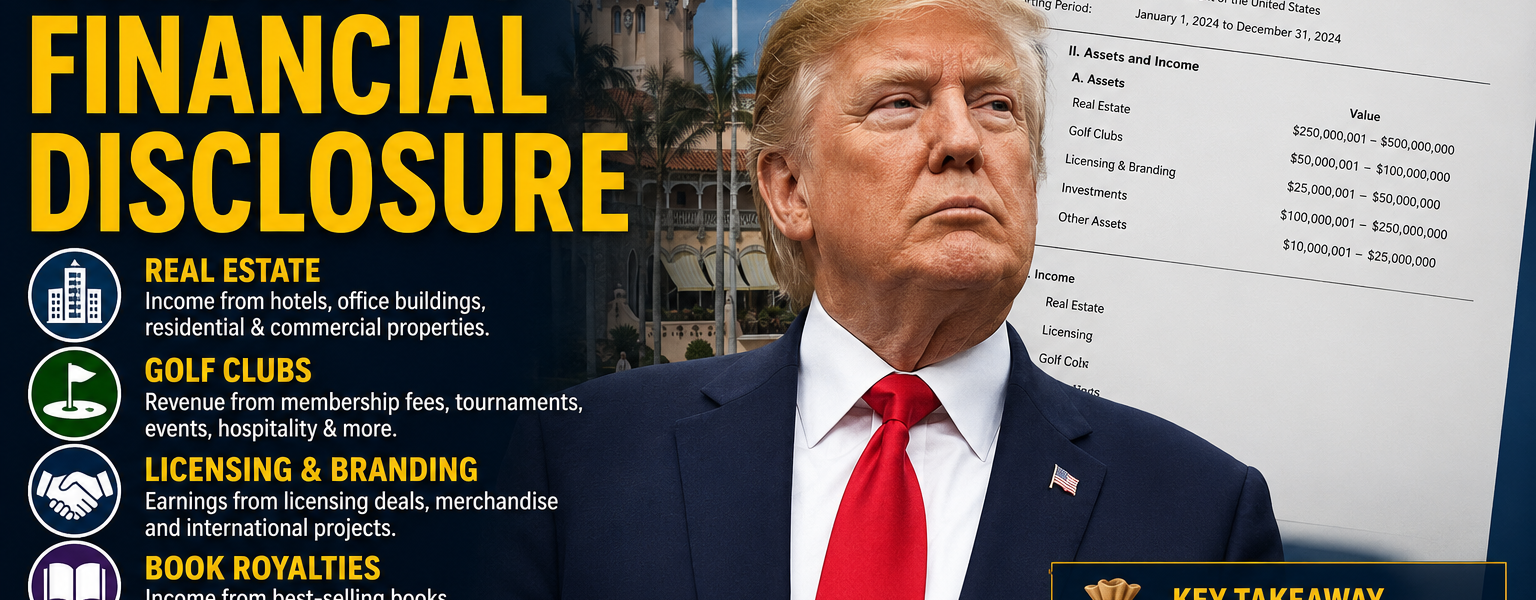
What to Know About Trump’s Financial Disclosure (2026) – Key Facts Explained

What to Know About Trump’s Financial Disclosure (2026) – Key Facts Explained
The latest Trump’s financial disclosure has once again drawn national attention, offering a detailed look at former U.S. President ‘s income, investments, business holdings, and financial interests.
The disclosure provides a snapshot of Trump’s financial position, revealing earnings from real estate, golf resorts, licensing agreements, book royalties, cryptocurrency-related ventures, and investment income. As Trump remains one of the most influential figures in American politics, these filings are closely examined by voters, financial experts, and ethics watchdogs.
This article explains everything you need to know about Trump’s financial disclosure and why it matters.
What Is a Financial Disclosure?
A financial disclosure is an official report filed by certain U.S. government officials and candidates. It is designed to increase transparency by showing:
• Sources of income
• Assets and liabilities
• Investments
• Business ownership
• Gifts and royalties
• Financial interests that could create conflicts
The disclosure is intended to help the public understand whether public officials could have financial interests that influence government decisions.
Key Highlights of Trump’s Financial Disclosure
According to the latest filing, Trump’s wealth continues to come from multiple business sectors.
1. Real Estate Remains His Biggest Asset
Real estate continues to generate significant income through:
• Luxury hotels
• Office buildings
• Residential properties
• Commercial leases
Many of these properties remain among the most valuable assets in Trump’s portfolio.
2. Golf Clubs Continue Generating Revenue
Trump’s golf resorts across the United States and overseas continue producing millions of dollars through:
• Membership fees
• Hotel bookings
• Golf tournaments
• Food and beverage sales
• Event hosting
Several golf properties remain profitable despite fluctuations in the hospitality industry.
3. Licensing and Branding Income
The Trump brand continues generating revenue through licensing agreements involving:
• Residential developments
• Merchandise
• International projects
• Branding partnerships
Instead of directly owning every project, licensing allows developers to pay for the use of the Trump name.
4. Book Royalties
Trump also earns money through book sales.
Popular titles continue generating royalty income, including political books and autobiographical works that remain popular among supporters.
5. Cryptocurrency Investments
One of the most talked-about sections of the disclosure involves cryptocurrency-related income and digital assets.
The filing highlights earnings connected to crypto ventures, reflecting Trump’s increasing involvement in the digital asset industry.
This marks a notable shift from previous years when Trump publicly criticized cryptocurrencies.
6. Investment Portfolio
The disclosure also lists investment income from:
• Stocks
• Bonds
• Mutual funds
• Cash investments
These investments generate additional passive income.
Business Holdings
Trump continues to maintain ownership interests in hundreds of companies connected to:
• Real estate
• Hospitality
• Golf
• Licensing
• Entertainment
• Investments
Many companies operate under larger business organizations connected to the Trump family.
Why Financial Disclosures Matter
Financial disclosures are important because they help the public evaluate:
• Potential conflicts of interest
• Sources of wealth
• Business relationships
• Ethical considerations
• Transparency in government
These reports allow voters and oversight organizations to better understand a candidate’s financial background.
Public Reaction
The disclosure has sparked discussion among:
• Political analysts
• Ethics experts
• Financial commentators
• Supporters
• Critics
Supporters argue the filing demonstrates Trump’s continued business success, while critics continue examining whether certain financial interests could present ethical concerns.
What Happens Next?
Financial disclosures are reviewed by ethics officials and often become part of broader public discussions during election cycles.
Experts may continue analyzing:
• Business earnings
• New investments
• Asset growth
• Liabilities
• Potential conflicts
Future filings could reveal additional changes in Trump’s financial portfolio.
Conclusion
Trump’s latest financial disclosure offers another detailed look into the financial empire built over decades through real estate, hospitality, branding, investments, and newer ventures like cryptocurrency.
While the filing provides significant transparency regarding income sources and business interests, it also continues to fuel political and public debate over ethics, wealth, and financial influence.
As financial disclosures remain an important part of public accountability, they will continue to receive close attention from voters, policymakers, and financial analysts alike.